
Hanna GroLine Hydroponic Nutrient Monitor with Inline Probe HI981421-01
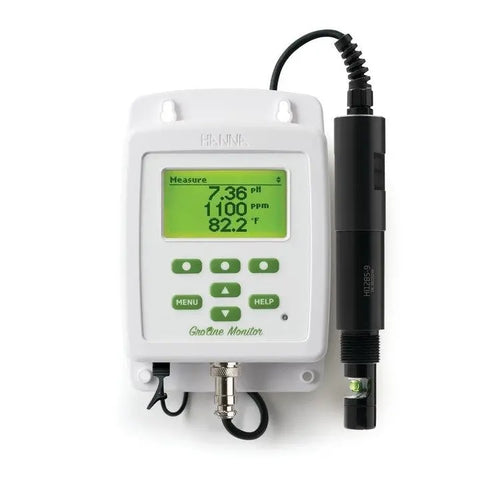
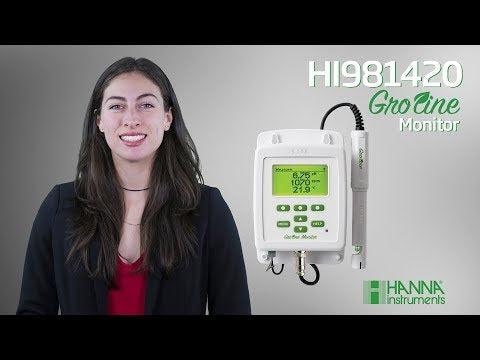
The Hanna GroLine Hydroponic Nutrient Monitor HI981421-01 provides continuous, around-the-clock monitoring of pH, electrical conductivity, TDS, and temperature in hydroponic nutrient solutions. Designed for hydroponic gardens, aquaponic systems, greenhouses, and commercial growing facilities, it gives growers an immediate view of the conditions affecting nutrient availability and plant performance.
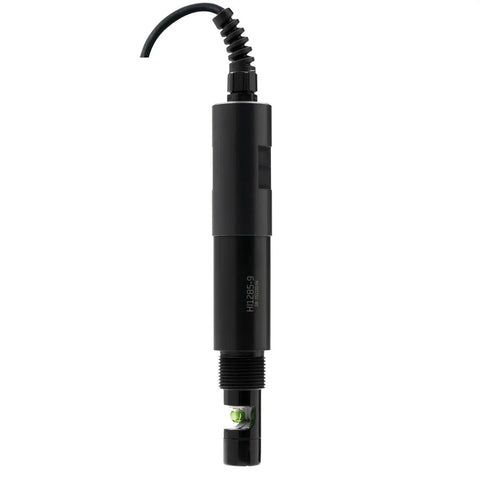
The included Hanna HI1285-9 multiparameter probe combines pH, EC/TDS, and temperature sensors inside one durable PVC body. It can remain continuously immersed or be installed through its 3/4-inch threaded connection for inline, flow-through monitoring. Readings appear together on the large, plant-friendly green LCD, while programmable alarms and automatic data logging help identify unwanted changes before they become larger crop problems.
Key Benefits
- Continuous nutrient monitoring: Tracks pH, EC or TDS, and temperature 24 hours a day.
- One probe, three measurements: The included HI1285-9 probe measures all essential nutrient-solution parameters from a single installation point.
- Inline or immersed installation: Use the probe in a reservoir or install it in compatible plumbing with its 3/4-inch threaded connection.
- Automatic data logging: Records measurements every 15 minutes and retains the most recent 30 days of data.
- Trend analysis: Stores minimum, maximum, and average values to help growers recognize recurring changes.
- High and low alarms: The display flashes when a monitored parameter moves beyond its programmed limits.
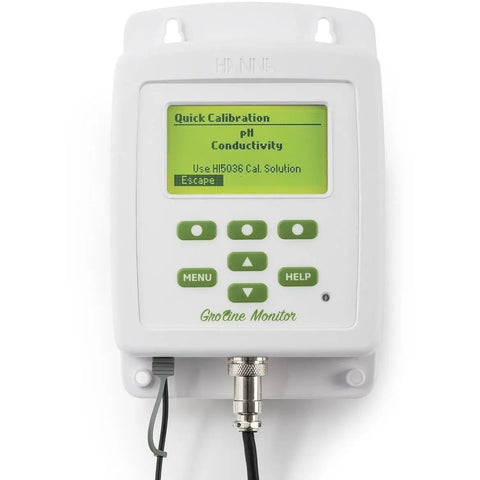
- Quick Cal compatibility: Calibrates pH and EC using one convenient Hanna Quick Cal solution.
- Independent calibration options: Supports standard pH buffers and dedicated conductivity standards when separate calibration is preferred.
- Temperature-compensated readings: Automatically compensates pH and conductivity measurements for temperature variations.
- Selectable TDS conversion: Choose a 0.5 or 0.7 EC-to-TDS conversion factor.
- USB-C data transfer: Export stored measurement data to a compatible computer or memory device.
- Green backlit display: Provides clear visibility while minimizing disruptive light inside the growing environment.
- Automatic display dimming: An ambient light sensor adjusts screen brightness as surrounding conditions change.
- IP65-rated enclosure: Protects the monitor from dust, particles, and water jets in demanding grow environments.
- GLP calibration history: Stores information from the five most recent pH and EC calibrations.
Measurement Specifications
- Model: HI981421-01
- Measured parameters: pH, EC, TDS, and temperature
- pH range: 0.00 to 14.00 pH
- pH resolution: 0.01 pH
- pH accuracy: ±0.05 pH at 25°C
- EC range: 0.00 to 10.00 mS/cm
- EC resolution: 0.01 mS/cm
- EC accuracy from 0.00 to 5.00 mS/cm: ±0.1 mS/cm at 25°C
- EC accuracy from 5.00 to 10.00 mS/cm: ±0.2 mS/cm at 25°C
- TDS range with 0.5 conversion factor: 0 to 5,000 ppm
- TDS range with 0.7 conversion factor: 0 to 7,000 ppm
- TDS resolution: 10 ppm
- TDS accuracy: ±2% of full scale at 25°C
- Temperature range: 0.0 to 60.0°C / 32.0 to 140.0°F
- Temperature resolution: 0.1°C / 0.1°F
- Temperature accuracy: ±0.5°C / ±1°F at 25°C
- EC temperature coefficient: 1.9% per °C
- Logging interval: Every 15 minutes
- Logging history: Most recent 30 days
- Alarm types: Programmable high and low alarms for each parameter
- Data connection: USB Type-C
- Operating environment: -5 to 50°C / 23 to 122°F
- Maximum relative humidity: 95% non-condensing
- Enclosure rating: IP65
- Power supply: Included 12 VDC adapter
HI1285-9 Multiparameter Probe
The included HI1285-9 probe combines three sensors inside one rugged PVC housing:
- A pH electrode for monitoring nutrient-solution acidity or alkalinity
- An amperometric conductivity sensor for EC and TDS measurement
- An internal temperature sensor for temperature readings and automatic compensation
Its pre-amplified design supports stable measurement in electrically active grow environments. The probe is designed for continuous immersion at depths of up to two meters and includes a 3/4-inch threaded connection for installation into compatible piping.
Display and Alarm Functions
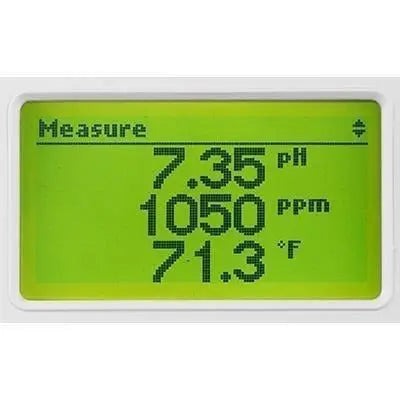
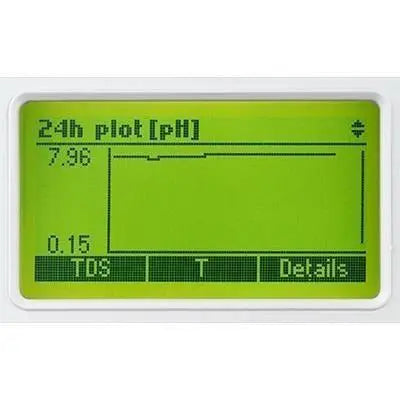
The large LCD can display pH, EC or TDS, and temperature together for quick system checks. Growers can also select a rotating single-parameter view or review real-time graphs and stored logs directly on the monitor.
Programmable high and low limits can be established for every measured parameter. When a reading moves beyond the selected range, the display flashes with a warning message so the nutrient solution can be inspected and corrected.
The ambient light sensor automatically adjusts the green display backlight as lighting conditions change.
Automatic Data Logging
The GroLine Monitor automatically records measurements every 15 minutes and maintains a rolling 30-day history. Minimum, maximum, and average values are stored to help identify:
- Gradual pH drift
- Rising or falling nutrient strength
- Temperature fluctuations
- Changes associated with irrigation cycles
- Repeating environmental or equipment-related patterns
Stored records can be exported through the USB-C connection for additional review, documentation, or long-term recordkeeping.
Calibration Options
The monitor provides two approaches to calibration:
- Quick Cal: Perform convenient one-point pH and conductivity calibration with Hanna Quick Cal solution.
- Standard pH calibration: Complete one- or two-point calibration using recognized pH 4.01, 7.01, or 10.01 buffers.
- Standard EC calibration: Complete one-point conductivity calibration using a 1.41 or 5.00 mS/cm conductivity standard.
Calibrate regularly and whenever readings appear questionable, the probe has been cleaned, or the nutrient solution requires especially precise management. Always use fresh calibration solution and follow the Hanna instruction manual.
Installation Options
For reservoir monitoring, suspend the probe so its sensors remain continuously immersed in a representative, well-mixed portion of the nutrient solution. Avoid placing it directly beside concentrated nutrient injection points, sediment accumulation, or stagnant water.
For inline monitoring, use the probe’s 3/4-inch threaded connection with compatible plumbing. Install it where the sensors will remain in continuous contact with the moving solution and follow Hanna’s instructions for orientation, sealing, and immersion.
Mount the display where it can be viewed easily and where the operating temperature and humidity remain within the published specifications.
Care and Maintenance
- Inspect the probe regularly for nutrient salts, algae, mineral deposits, and organic residue.
- Clean the probe with an appropriate Hanna electrode-cleaning solution when readings become slow or unstable.
- Rinse away cleaning solution before calibration or returning the probe to service.
- Use fresh calibration standards and never pour used solution back into its original container.
- Recalibrate after cleaning or extended storage.
- Avoid scratching or aggressively wiping the pH glass.
- Never exceed the probe’s specified immersion depth.
- Protect the monitor’s connections and power supply from condensation and standing water.
- Review calibration history and alarm events as part of routine reservoir maintenance.
What Is Included
- Hanna HI981421 GroLine Hydroponic Nutrient Monitor
- Hanna HI1285-9 multiparameter inline probe
- Hanna Quick Cal solution sachets
- Hanna agricultural electrode-cleaning solution sachets
- 12 VDC power adapter
- Quality certificates
- Instruction manual
Important Usage Notes
- The HI981421-01 monitors nutrient-solution conditions but does not automatically add nutrients, adjust pH, operate dosing pumps, or control irrigation equipment.
- TDS values are calculated from conductivity using the selected 0.5 or 0.7 conversion factor.
- Establish target ranges according to the crop, growth stage, fertilizer program, water source, and growing medium.
-
Alarms alert the grower to an out-of-range condition; they do not correct that condition automatically.
- For dependable comparisons, maintain consistent probe placement, solution circulation, calibration practices, and TDS conversion settings.
