

Real Growers Grow Dots Classic 16-11-11 Fertilizer
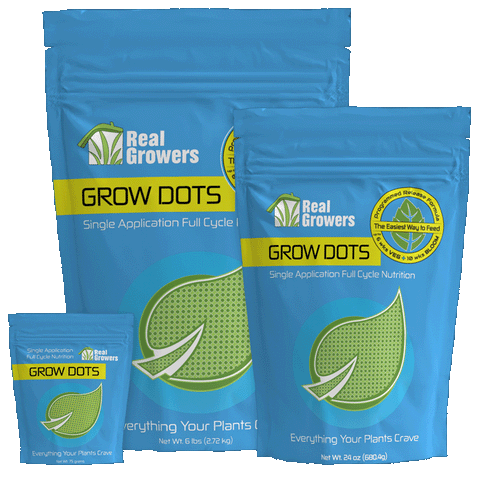
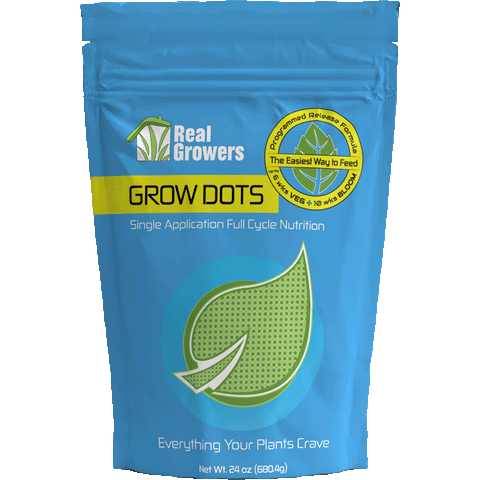
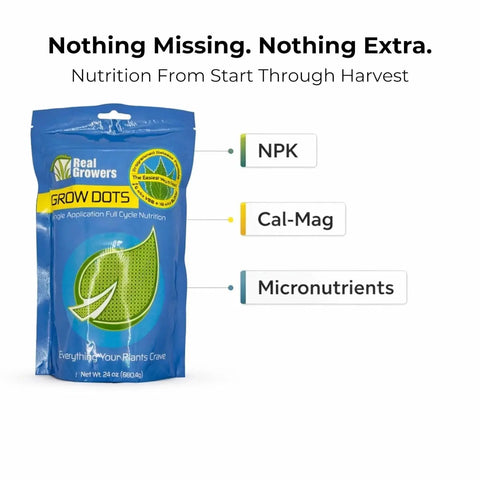
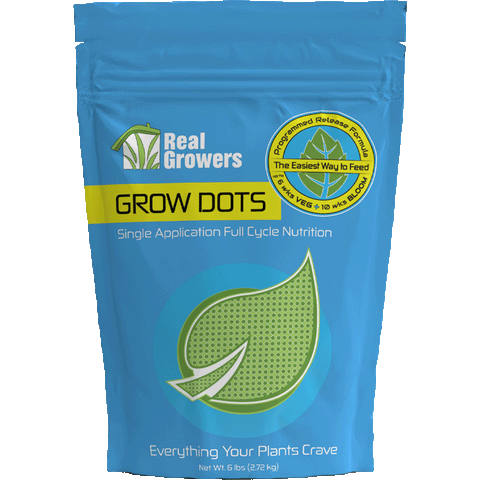
Feed plants from vegetative growth through flowering with one convenient application of Real Growers Grow Dots Classic 16-11-11 Fertilizer. This programmed-release dry fertilizer is designed for plants with a 4–6 week vegetative period followed by approximately 8–10 weeks of flowering.
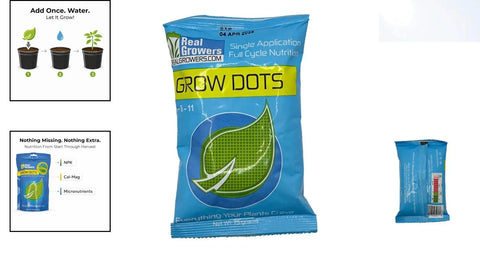
Mix Grow Dots into soil or soilless growing media when moving plants into their finishing containers. Water activates the coated fertilizer granules, which release nitrogen-rich nutrition during vegetative growth before shifting toward phosphorus and potassium during flowering. Calcium, magnesium, sulfur, and essential micronutrients release gradually throughout the growing cycle.
Features and Benefits
- Single-application nutrition: One application can feed plants throughout an entire 12–16 week growing cycle under suitable conditions.
- Programmed nutrient delivery: Automatically transitions from vegetative nutrition to phosphorus- and potassium-focused bloom nutrition.
- Classic growth schedule: Designed for approximately 4–6 weeks of vegetative growth followed by 8–10 weeks of flowering.
- Complete 16-11-11 fertilizer: Supplies nitrogen, phosphorus, potassium, calcium, magnesium, sulfur, and micronutrients.
- Full-cycle calcium and magnesium: Slow-release Cal-Mag supports plant nutrition throughout vegetative growth and flowering.
- Automatic nutrient phase-out: Nutrient availability gradually tapers late in flowering, reducing the need for a separate pre-harvest flushing program.
- Simplifies plant feeding: Replaces complicated multi-bottle nutrient schedules with regular watering.
- Controlled-release coating: A food-grade polymer coating regulates nutrient delivery based on moisture and media temperature.
How Grow Dots Work
- Vegetative phase: Releases nitrogen-rich nutrition to support leafy plant growth during the first 4–6 weeks.
- Transition and bloom: Phosphorus- and potassium-focused nutrition becomes more available as plants enter flowering.
- Full growing cycle: Calcium, magnesium, sulfur, and micronutrients continue releasing gradually.
- Late flowering: Nutrient release naturally fades as plants approach the end of their growing cycle.
Guaranteed Analysis
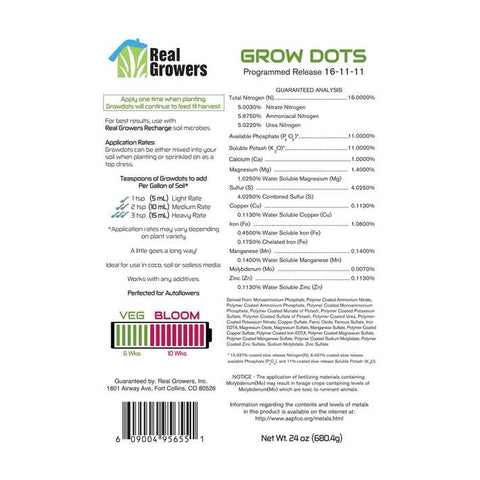
- Total Nitrogen (N) — 16.0%
- Available Phosphate (P2O5) — 11.0%
- Soluble Potash (K2O) — 11.0%
- Calcium (Ca) — 1.0%
- Magnesium (Mg) — 1.4%
- Sulfur (S) — 4.025%
- Copper (Cu) — 0.113%
- Iron (Fe) — 1.06%
- Manganese (Mn) — 0.14%
- Molybdenum (Mo) — 0.007%
- Zinc (Zn) — 0.113%
Ideal For
- Plants with a 4–6 week vegetative period
- Indoor container gardens and grow tents
- Fast-turnaround growing schedules
- Coco coir and peat-based growing media
- Pro-Mix, Sunshine mixes, and other inert soilless media
- New growers seeking a simpler fertilizer program
- Busy growers who want to eliminate frequent nutrient mixing
Application Rate
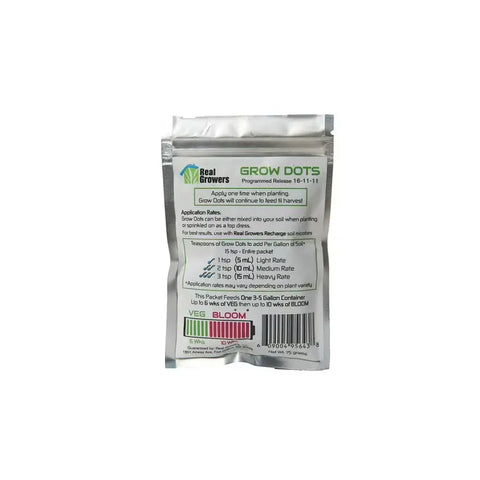
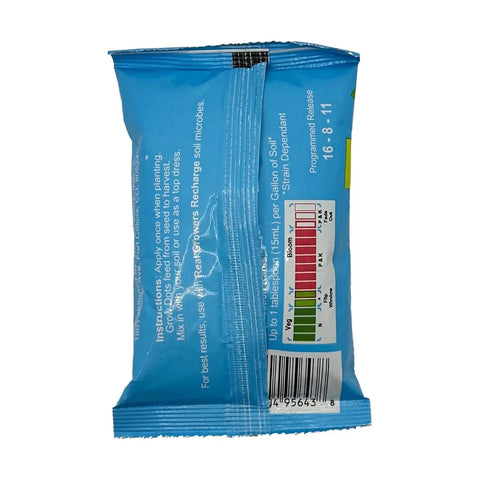
Mix 1 tablespoon, or approximately 15 grams, per gallon of growing media. Distribute the fertilizer evenly throughout the media when moving the plant into its finishing container.
For starter cups, use approximately 1 teaspoon, or 5 grams, per plant. After the starter stage, transplant directly into the finishing container. Grow Dots is not recommended for schedules involving several intermediate up-potting steps.
Important Growing Information
- Grow Dots performs best in inert or lightly amended soil and soilless media.
- Reduce the application rate when using heavily fortified or pre-fertilized soil.
- Moisture activates nutrient release, while media temperature controls the release rate.
- Maintain an average root-zone temperature of approximately 68–75°F for more predictable nutrient delivery.
- Grow Dots is designed for soil and soilless media and is not recommended for deep-water culture systems.
- Store unused fertilizer in a cool, dry, dark location and protect it from moisture.
Classic or Extended Veg?
Choose Grow Dots Classic for plants with approximately 4–6 weeks of vegetative growth. Choose Grow Dots Extended Veg when planning an 8–10 week vegetative period before flowering.
Growing conditions, plant variety, container size, media fertility, moisture, and temperature can affect fertilizer release and plant requirements. Monitor plants throughout the growing cycle and follow the directions printed on the product label.
