
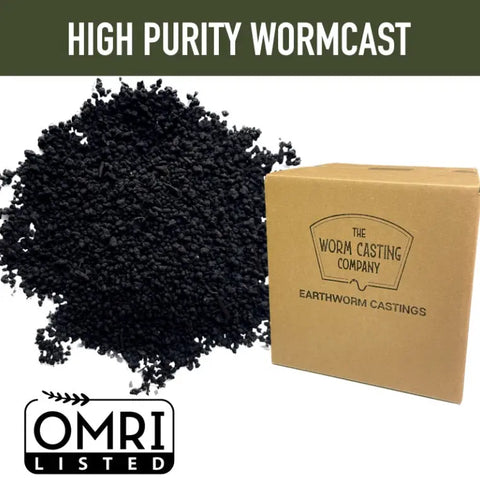
The Worm Casting Company Earthworm Castings – Standard Grain
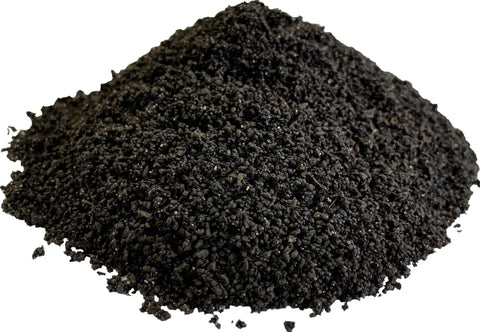
The Worm Casting Company Standard Grain Earthworm Castings are microbe-rich castings screened from finished vermicompost through a 1/8-inch mesh for consistent texture and high purity. This natural soil amendment introduces a diverse population of beneficial soil microorganisms that supports vigorous root development and helps make nutrients more available for plant uptake.
Suitable for garden beds, planting holes, seed furrows and container mixes, these earthworm castings can be blended with existing soil or growing media without replacing your regular fertility program. They are OMRI Listed for use in organic production.
Benefits of Earthworm Castings
- Microbe-rich soil amendment: Introduces a broad diversity of beneficial soil microorganisms.
- Supports healthy roots: Encourages the biologically active root zone needed for vigorous plant growth.
- Improves nutrient availability: Helps soil microorganisms convert nutrients into forms plants can more readily use.
- Consistent standard grain: Screened through a 1/8-inch mesh for reliable blending and application.
- Versatile application: Suitable for vegetable gardens, flowers, herbs, trees, shrubs and container plants.
- Organic gardening approved: OMRI Listed for use according to an approved organic system plan.
How to Use
Garden Beds and Ground Application
Spread 10–30 pounds per 100 square feet and, when possible, blend the castings into the upper layer of soil.
Seed Rows and Planting Furrows
Apply a 1/4- to 1/2-inch layer along the planting furrow before or while placing seeds and transplants.
Planting Holes
Mix worm castings into the backfill at 10%–20% of the total soil volume. Alternatively, place a 1/2-inch layer in the bottom of the planting hole before backfilling.
Containers and Potting Mixes
Blend worm castings into potting soil or growing media at 2%–20% of the total mix volume.
Note: Earthworm castings are primarily a biological soil amendment and conditioner. Nutrient requirements vary by plant and growing environment, so additional fertilizer may be needed for heavy-feeding crops.
